
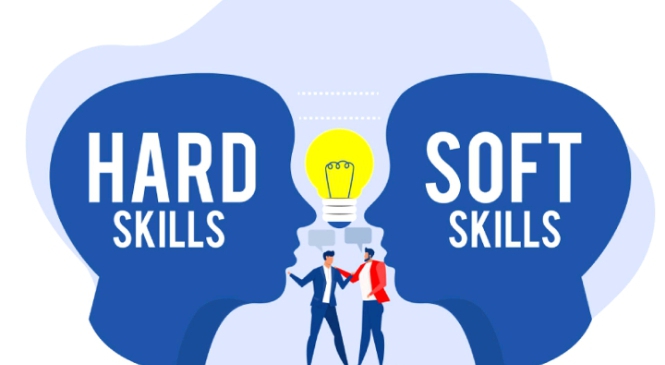
Difference between Hard skills and Digital skills
Introduction
In today’s modern world, skills play a vital role in career growth and personal development. Among the most important skills are Hard Skills and Digital Skills. While both are essential for success, they serve different purposes. Understanding the difference between them helps students, job seekers, and professionals choose the right learning path and stay competitive in the job marketing.
🔹 Hard Skills
Hard skills are technical abilities required to perform specific job-related tasks. These skills are usually learned through education, training programs, or hands-on experience.
Examples:
- Programming & coding
- Graphic designing
- Accounting & finance
- Data analysis
- Mechanical or electrical skills
🔹 Digital Skills
Digital skills involve the use of technology, software, and online platforms to work efficiently in the digital environment.
Examples:
- Computer & internet usage
- Microsoft Office & Google tools
- Social media management
- Online communication (Email, Zoom)
- Digital marketing basics
Tips to Learn Hard & Digital Skills
- Start with basic computer knowledge
- Choose skills according to your career goals
- Practice daily for at least 30–60 minutes
- Use free and paid online learning platforms
- Apply skills in real-life projects
Tools for Learning
Hard Skills Tools:
- Programming IDEs (VS Code)
- Design tools (Photoshop, Illustrator)
- Data tools (Excel, Power BI)
Digital Skills Tools:
- Microsoft Office / Google Workspace
- Email platforms (Gmail, Outlook)
- Communication tools (Zoom, Slack)
- Social media apps
Time Required to Learn
- Skill Type Beginner Level Intermediate Level
- Hard Skills 3–6 months 6–12 months
- Digital Skills 1–2 months 3–6 months
(Time depends on practice and learning speed)
Benefits of Hard & Digital Skills
- Better job opportunities
- Higher salary potential
- Increased productivity
- Career growth & stability
- Adaptability to modern technology
Conclusion
Hard skills and digital skills are both essential in today’s competitive world. Hard skills enable individuals to perform specific professional tasks, while digital skills help them use technology effectively in daily work life. By combining both skill sets, a person becomes more efficient, confident, and successful in the modern workplace. Continuous learning and practice are the keys to long-term success.